
How to Use a 3 Compartment Sink
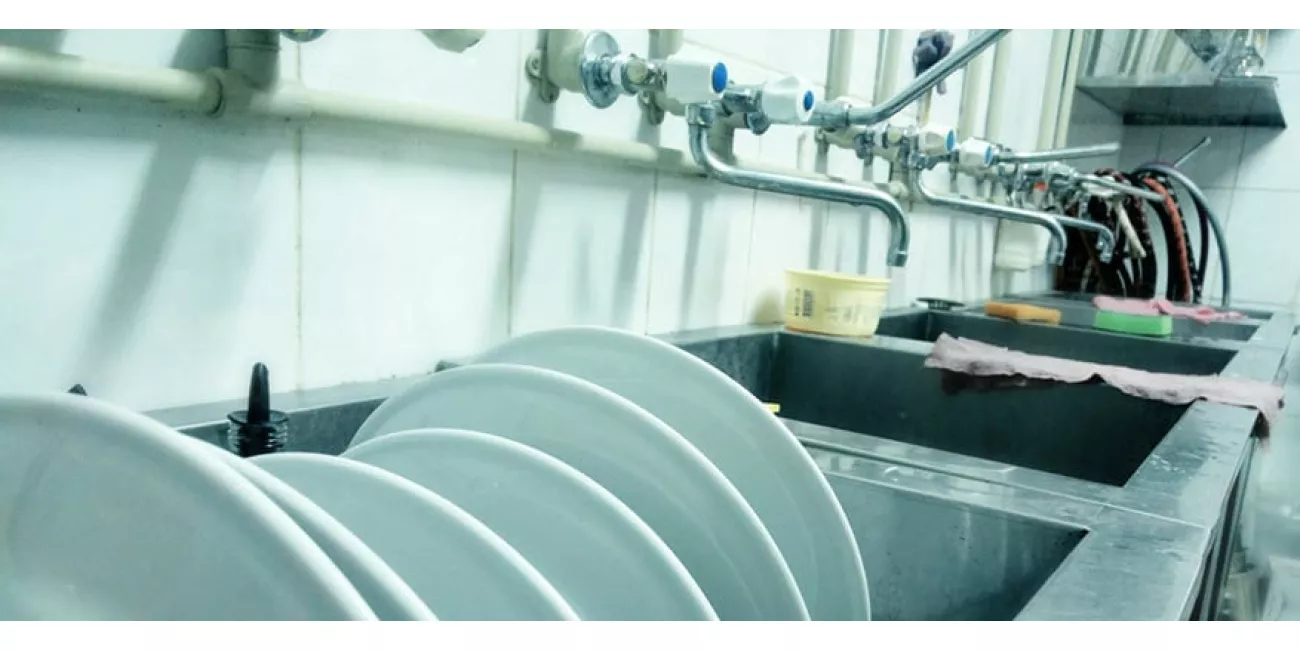
It is essential for any commercial kitchen to have an operational warewashing facility to keep its utensils and cooking apparatus clean and healthy. Thus, it is important to learn how to use a 3-compartment sink to fulfill the health requirements.
FDA Food Code requires food business establishments to have an approved 3-compartment sink in case of lack of mechanical warewashing facilities. Using high-quality three-compartment sinks is helpful in creating an efficient wash procedure.
The 3-compartment model is an appliance where washing, rinsing, and sanitizing are done in separate basins. It is widely used in restaurants, cafés, pubs, bakeries, catering companies, and food trucks. To follow 3 compartment sink guidelines is useful to ensure sanitary standards and decrease food safety risks. The largest pot from the kitchen should fit flat in all compartments.
The 3-Step Wash, Rinse, Sanitize Procedure
The proper 3-compartment sink procedure requires three steps.
Step 1 - Wash
Prepare the first compartment with soap or detergent and water that should be no less than 110°F (43°C). Remove grease and food debris. Change the water when it becomes contaminated or when the water is not hot enough.
Step 2 - Rinse
Use only clean water. This step will remove all traces of detergent.
Step 3 - Sanitize
The final 3-compartment sink wash-rinse-sanitize step is needed to destroy any harmful stuff.
- Chlorine: 50-100 ppm, not less than 55°F, no less than 7 seconds
- Quat ammonium: 200-400 ppm, not less than 75°F, no less than 30 seconds
- Hot water: 171°F or hotter for 30 seconds
For proper three-compartment sink sanitizing, you should check sanitizer concentration by using test strips. Always air-dry your dishes instead of using a towel.
Sanitizer Quick-Reference Table
| Method | Concentration / Temperature | Contact Time |
|---|---|---|
| Chlorine | 50–100 ppm, ≥55°F | ≥7 seconds |
| Quat ammonium | 200–400 ppm, ≥75°F | ≥30 seconds |
| Hot water | ≥171°F | ≥30 seconds |
Top 5 Violations That Fail Health Inspections
Experienced kitchen crews are not immune to overlooking minor details that may result in a failed inspection. Violations happen because of:
- Washing dishes using water less than 110°F.
- Not replacing the sanitizing solution every 2-4 hours, or after it gets contaminated.
- Drying dishes manually, without the air drying process.
- No pre-scraping of heavily soiled dishes prior to washing.
- A three-compartment sink is used for washing hands instead of dedicated hand sinks.
Training and regular checking of these aspects can prevent all these violations.
Choosing the Right Sink Size
The optimum size of a sink will increase the efficiency of the washing process and avoid any bottlenecks during peak serving hours.
- Bar/cafe type: 10” x 14” x 10” bowls suitable for glasses and cutlery.
- Restaurant type: 18” x 18” x 12” bowls with drainboards are appropriate for standard operation.
- Large volume kitchens: 24” x 24” x 14” bowls are required for large cookware.
And there is one golden rule that must always be considered: your biggest pot/pan must fit inside all compartments of your sink.
Floor drain strainers and grease traps can also be added to have a complete sanitation system to prevent drain clogging.
FAQ
What temperature should each compartment be?
Wash at 110°F (43°C) or above. Rinse with clean water. Sanitize with chlorine at 55°F minimum temperature or hot water at 171°F.
How often should you change the water?
Every time it gets dirty, does not reach the desired temperature, or every 2-4 hours.
Can a 3-compartment sink be used for handwashing?
No. Separate hand sinks are provided for commercial kitchen staff hand washing.
Ready to upgrade your kitchen? Browse our full selection of stainless steel 3 compartment sinks — durable, NSF-compliant options for any commercial kitchen.